Welcome to visit Hoyogo website, let's connect the world together!
Customer service hotline:+86 13723413985 or 400 058 2288
With the continued development of precision medicine and minimally invasive treatment concepts, ultrasound therapy devices featuring non-invasive/minimally invasive operation, controllable energy output, and adjustable parameters are increasingly used in rehabilitation therapy, pain management, and certain tumor-related treatment scenarios. As highly integrated electronic systems, these devices place higher demands on electrical stability, signal integrity, power control, and overall safety and reliability. In industry practice, medical-grade PCBs are widely regarded as a critical foundation for stable device operation: they interconnect functional modules and provide essential support for signal transmission, power delivery and distribution, anti-interference design, and long-term reliability.
As a professional medical PCB manufacturer, HoYoGo can provide high-reliability PCB manufacturing and delivery support that meets medical application requirements for ultrasound therapy equipment. The following sections will explain the topic from four aspects: system role, core technical requirements, key module applications, and technology trends.
1. System Role and Key Functions: The Value of Medical PCBs in Ultrasound Therapy Devices
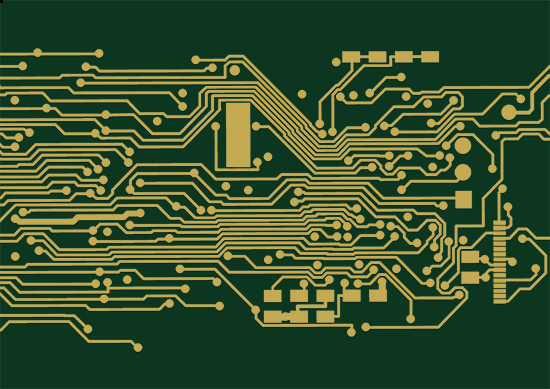
As a highly integrated medical electronic device, an ultrasound therapy system relies on the stable support of medical-grade PCBs to realize its core functions. Within the system, the PCB is responsible for interconnecting high-speed signals and control signals, delivering and distributing power, and mounting key components. It links critical parts such as the ultrasound transducer drive chain, the main control and algorithm processing unit, and the display and human-machine interface modules, serving as a foundational platform for the device’s electrical performance and overall reliability.
Compared with standard industrial PCBs, products designed for medical applications typically require stricter traceability and consistency, along with targeted design for electromagnetic compatibility (EMC), signal integrity, insulation and dielectric strength, resistance to cleaning and disinfection environments, and long-term reliability. In applications such as tumor-related treatments and rehabilitation therapy, the system demands more stable energy output and tighter control synchronization. Accordingly, the PCB’s low-noise power delivery, anti-interference layout, and reliable interconnections provide critical hardware support for safe operation and controllable performance.
2. Core Technical Requirements: High-Frequency Signals, Power Delivery Paths, and Reliable Production and Delivery
The application characteristics of ultrasound therapy devices place higher technical and reliability requirements on medical PCBs. In terms of reliability and stability, the PCB must maintain long-term performance consistency under continuous high-frequency signal operation and multi-source power conditions. Through appropriate material selection, stack-up and structural design, and controlled manufacturing processes, failure risks can be reduced to support stable device operation. Depending on system needs, medical PCBs often adopt low-loss material systems and high-reliability surface finishes to enhance signal integrity and long-term durability.
For ultrasound signal transmission, given the MHz-level high-frequency operating characteristics, medical PCBs must deliver low loss, low crosstalk, and solid impedance control. By optimizing routing, maintaining continuous ground planes, and applying anti-interference structural design, signal attenuation and interference can be minimized, providing support for stable system control and energy management.
As portable and highly integrated ultrasound therapy devices continue to evolve, miniaturization and higher integration have become key trends. High-density interconnect (HDI) and blind and buried via processes enable higher functional integration in limited space and support lightweight device design. In addition, the manufacturing process of medical PCBs should align with medical device quality management system requirements and meet relevant industry and regulatory standards in areas such as flame retardancy, material safety, and traceability, providing a solid foundation for compliance and reliability in medical equipment.
3. Key Module Applications: Power Drive, Signal Paths, and Main Control Interaction
Medical PCBs play a critical role in electrical component support and interconnection across multiple core electronic modules in ultrasound therapy devices. In power drive and amplification modules, the PCB must enable stable mounting and reliable connectivity for power components. With appropriate copper thickness selection, trace structure design, and thermal layout, it can meet higher requirements for current-carrying capacity, dielectric strength, and thermal management, providing essential support for stable operation of the ultrasound transducer.
In signal acquisition and processing modules, the PCB primarily serves to carry both analog and digital circuits, with stricter requirements for return-signal integrity and anti-interference capability. By optimizing routing structures, functional partitioning, and grounding design, risks of noise coupling and crosstalk can be reduced, providing stable hardware conditions for signal acquisition, processing, and synchronization.
Main control and human-machine interface modules typically integrate microprocessors, display functions, and interaction interfaces, which place higher demands on the PCB’s electromagnetic compatibility and multi-interface coordination. Proper shielding, isolation, and partitioning design help reduce interference between modules and improve overall system stability. In power management modules, the PCB supplies stable power to each functional unit through the power distribution network (PDN), and with redundancy design plus the layout of overcurrent and overvoltage protection circuits, it provides support for safe device operation.
4. Technology Trends: Continued Advances in Integration and Reliability Requirements
As ultrasound therapy equipment moves toward higher performance and greater intelligence, the requirements placed on the underlying hardware platform continue to rise. As a key electronic carrier, medical PCBs are showing multiple directions of technical evolution.
From an electrical performance perspective, increasing system integration and more complex signal paths are driving higher requirements for high-frequency signal integrity, impedance control, and anti-interference capability, in order to support multi-channel operation, high-speed control, and data transmission needs.
From a structural and integration perspective, miniaturization and portability are driving PCBs toward higher density and greater functional integration. The adoption of technologies such as high-density interconnect (HDI), blind and buried vias, and fine line width and spacing helps achieve reliable layout of more functional modules within limited space.
From a reliability and quality control perspective, medical devices continue to demand stable long-term operation. Through material optimization, structural simulation, process consistency control, and reliability verification, medical PCBs must better adapt to complex use environments while meeting medical application requirements for safety, traceability, and consistency.
Overall, future medical PCBs will continue to be optimized around performance stability, integration capability, and manufacturing reliability, providing a solid hardware foundation for the ongoing iteration of ultrasound therapy equipment.
HoYoGo is an international, professional, and reliable medical PCB manufacturer, certified to ISO 9001, ISO 14001, and ISO 13485 management systems. We offer advanced multilayer PCB manufacturing capabilities: rigid PCBs up to 100 layers; HDI PCBs up to 32 layers; flexible PCBs up to 12 layers; and rigid-flex PCBs up to 32 layers. We manufacture PCBs and provide assembly services based on customer-supplied Gerber files, BOMs, and process requirements. If you are looking for a trustworthy medical PCB partner, please feel free to contact us or send an RFQ, we will be happy to support you.


 English
 Français
 Deutsch
 Português
 Pусский
 中文
中文