Welcome to visit Hoyogo website, let's connect the world together!
Customer service hotline:+86 13723413985 or 400 058 2288
A memory module is a critical component in computing systems that provides temporary data storage. The memory module PCB serves as the physical and electrical foundation of the module. It is designed to mount DRAM chips and other electronic components while providing electrical connections among them and between the memory module and the system motherboard through conductive traces. Additionally, it provides the mechanical support and signal transmission paths required for reliable memory operation.
With the advancement of DDR5 memory, AI servers, and high-performance computing (HPC) applications, data transfer speeds of memory modules continue to increase. As a result, more stringent requirements are placed on PCB signal integrity, impedance control, layer-to-layer registration accuracy, and overall reliability. Therefore, memory module PCBs typically adopt high-precision multilayer PCB structures and rely on mature manufacturing processes as well as rigorous quality management systems.
As a professional PCB factory, HoYoGo specializes in multilayer PCB fabrication and volume production, providing reliable manufacturing support for high-performance memory module applications.
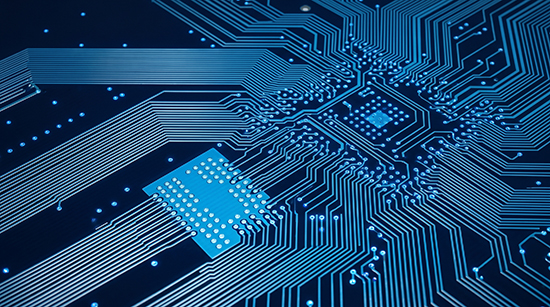
Key Functions of Memory Module PCBs
Within a memory module, the PCB itself does not perform data storage or computational functions. Its primary role is to provide mechanical support and electrical interconnections for electronic components while enabling reliable high-speed signal transmission.
1) Component Mounting Platform
The memory module PCB serves as a platform for mounting electronic components and providing electrical interconnections. It accommodates DRAM chips and other components required for memory module operation. Its mechanical structure secures components and ensures reliability throughout transportation, assembly, and long-term operation.
2) Electrical Interconnection Platform
The memory module PCB provides electrical interconnections among various electronic components through conductive circuitry, creating transmission paths for data, address, and control signals. This supports the interconnection requirements of the memory system while ensuring reliable high-speed signal transmission.
3) Signal Transmission Platform
As data rates in memory systems continue to increase, higher requirements are placed on signal integrity. As a key element of the signal interconnection structure, the memory module PCB provides low-loss and stable electrical transmission paths for high-speed data transfer, helping meet the high-speed signal transmission requirements of modern memory systems.
4) Power Distribution and Stability Support
In addition to signal transmission, the memory module PCB provides power and ground distribution for DRAM chips and related components, ensuring a stable power delivery environment. Effective power integrity design helps reduce electrical noise and improve the stability and reliability of memory modules during high-speed operation.
Trends in Memory Module PCB Development
1) DDR5 and High-Speed Storage Technologies Drive PCB Upgrades
With the widespread adoption of DDR5 memory and the development of higher-bandwidth memory technologies, data transfer rates of memory modules continue to increase. To ensure stable high-speed signal transmission, stricter requirements are placed on PCB impedance control, layer-to-layer registration accuracy, signal integrity, and reliability.
2) AI Servers and Data Centers Drive Demand Growth
The rapid development of artificial intelligence, cloud computing, and big data analytics is accelerating data center expansion, increasing demand for server memory capacity and bandwidth. This, in turn, is driving continuous growth in demand for high-performance memory module PCBs. Meanwhile, long-term continuous server operation imposes stricter requirements on PCB stability and batch-to-batch consistency.
3) Manufacturing Challenges of High-Capacity and High-Density Designs
As single memory module capacities continue to increase, the number of memory devices integrated per module also rises, resulting in more complex circuit layouts. Higher component density places greater demands on PCB stack-up design, manufacturing precision, signal integrity, and long-term reliability.
4) AI Computing Drives Advanced PCB Design Requirements
AI servers and high-performance computing platforms typically require memory systems with larger capacities and higher bandwidth, placing stricter demands on signal integrity within memory modules. With the adoption of next-generation memory technologies such as DDR5 and MRDIMM, high-speed routing, impedance control, and power integrity design are becoming increasingly critical, driving memory module PCBs toward higher precision and greater reliability.
HoYoGo is an international, professional, and reliable PCB factory. We provide one-stop services covering electronic component sourcing, PCB fabrication, SMT assembly, PCBA testing, and final product assembly. If you are looking for a trusted PCB manufacturing partner, feel free to contact us for a quote.


 English
 Français
 Deutsch
 Português
 Pусский
 中文
中文