Welcome to visit Hoyogo website, let's connect the world together!
Customer service hotline:+86 13723413985 or 400 058 2288
As technology continues to evolve, LED lighting has expanded far beyond everyday illumination, finding wide application in commercial displays, immersive exhibitions, and interactive art installations. As a key hardware foundation for LED lighting and control systems, LED PCBs offer high structural flexibility, energy efficiency, and strong customization capabilities, enabling artists and designers to realize complex forms, dynamic lighting effects, and spatial storytelling with greater freedom.
In the practical implementation of art installations, factors such as customized board design, long-term stability, and production consistency play a critical role in the final visual outcome. As a professional LED PCB manufacturer, HoYoGo provides reliable support in manufacturing execution, reliability control, and scalable mass production, helping creative lighting and art installation projects move more smoothly from concept to on-site realization. This article explores the diverse applications of LED PCBs in art installations and the new possibilities they bring to artistic expression.
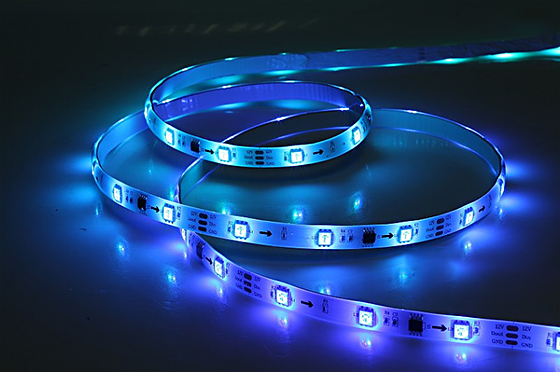
1. Creating Dynamic Lighting Effects
One of the key advantages of LED PCBs lies in their ability to integrate driver and control circuits, enabling more stable and sophisticated dynamic lighting effects. In art installations, lighting and control systems built on LED PCBs allow precise programming of brightness, color temperature, color, and transition timing. This makes zoned or even pixel-level dynamics possible, turning light into an integral part of the artwork’s narrative. These dynamic effects not only reinforce the thematic expression of the work, but can also respond to audience behavior or temporal changes. For example, in interactive installations, a viewer’s proximity, touch, or dwell time can trigger shifts in lighting states, creating an immersive experience that is “perceivable and responsive.” Through the combination of gradients, flickering effects, and multi-layered brightness control, art installations evolve from static displays into continuously changing visual environments.
2. Flexible Integration and Custom Design
LED PCBs offer a high degree of customization in terms of size, shape, and layout, allowing artists to design lighting solutions that align closely with the structure and narrative of a work. Through the use of custom-shaped boards, segmented layouts, or modular assemblies, LED PCBs can be integrated into traditional formats such as frames and walls, as well as combined with the geometric structures of the installation itself to create more complex lines and forms. For example, when paired with transparent or semi-transparent materials, such as acrylic, light guide panels, or resin, LED PCBs can produce layered lighting and interwoven light-and-shadow effects. Curved arrangements, irregular dot matrices, or segmented control schemes further enhance rhythm and visual tension.
At the same time, the integrated design of LED PCBs helps create richer layering and three-dimensional effects within limited space. Compared with conventional distributed lighting solutions, LED PCBs are typically thinner and easier to install in a structured way, while making it easier to plan wiring and thermal management at the layout stage. This allows them to integrate more naturally into a wide range of materials and forms, including metal structures, woodwork, acrylic, and 3D-printed components, providing greater creative freedom and on-site maintainability for art installations.
3. Energy Efficiency and Long-Term Reliability
For art installations, especially public artworks designed for long-term operation, energy consumption and durability often have a direct impact on operating costs and display performance. By using LED light sources in combination with the structural and thermal design of LED PCBs, stable and continuous light output can be achieved at relatively low power levels. When paired with dimming, zoned control, or sensor-based interaction strategies, unnecessary energy use can be further reduced. Compared with traditional lighting solutions, LEDs generally offer higher energy efficiency and longer service life, helping installations maintain consistent visual quality over extended periods while minimizing the need for frequent light source replacement and maintenance.
This advantage is particularly significant in public space applications. Whether applied to sculptures, murals, or large-scale light and media artworks, choosing a more reliable LED PCB solution typically helps reduce maintenance frequency and overall operational costs, allowing artistic works to present their creative value and visual impact in complex environments over the long term.
4. Enhancing Interactivity
Modern art installations increasingly emphasize interactive experiences between the artwork and its audience. As a hardware integration platform, LED PCBs allow drivers, power components, and control interfaces to be centrally arranged and to work in coordination with sensors and control units. This enables lighting to respond in real time to inputs such as audience movement, touch, position, or sound, dynamically transforming the visual presentation of the artwork. Interactive lighting is not only visually engaging but also translates audience participation directly into the artwork itself, creating a form of dynamic storytelling that can be triggered and responded to.
At the experiential level, interactive lighting helps establish a deeper emotional connection with viewers. Audiences are no longer passive observers but active participants who contribute through their own actions. For example, light may ripple outward as visitors approach, or patterns may layer and evolve as multiple participants engage simultaneously. In public spaces, this naturally results in installations with stronger immersion and greater potential for engagement and sharing.
5. Creating Rich and Expressive Color Experiences
Color is one of the most powerful expressive elements in art installations. By using multi-channel LEDs such as RGB, RGBW, or tunable white and dual-color temperature solutions in combination with control systems, installations can achieve rich color variations and smooth transitions between warm and cool lighting atmospheres within a single space. LED PCBs provide a stable integration platform for LED placement, signal routing, and thermal management, ensuring more consistent and controllable color performance. For example, by adjusting color temperature and color parameters, lighting can transition naturally from cool tones to warm tones or create high-contrast color compositions that clearly shape the emotional atmosphere of a space at different moments.
In addition, lighting color changes can be synchronized with sound, imagery, and other artistic elements to create multi-sensory experiences. In digital art and interactive installations, lighting color and brightness may dynamically respond to musical rhythm, audio frequency ranges, or dominant colors within visual content, allowing audiences to experience a deeper sense of immersion through the synchronized evolution of visual and auditory elements.
6. Applications in Art Exhibitions and Large-Scale Installations
In large public art installations and exhibition environments, lighting systems composed of modular LED PCB panels are often used to construct adaptable lighting grids, pixel arrays, and spatial light structures, creating immersive experiences with a strong sense of futurism and technology. Through modular design, LED PCBs can be flexibly assembled into various shapes and configurations, forming visual elements such as light walls, light tunnels, and circular light curtains. These systems can also be zoned and expanded efficiently according to venue size and visitor flow, making them suitable for a wide range of indoor and outdoor exhibition settings.
In certain exhibitions, LED PCBs are further integrated with digital content, projection systems, and interactive technologies to create dynamic and immersive art spaces. By applying zoned or pixel-level lighting output with precise timing control and synchronizing it with visual content, artworks can achieve dynamic changes in color and brightness while responding to environmental conditions and audience behavior. This approach creates spatial atmospheres where virtual and physical elements are interwoven, enhancing the overall immersive experience.
HoYoGo is an international, professional, and reliable LED PCB manufacturer, focused on high-quality, high-reliability LED PCB manufacturing and mass production delivery. With stable manufacturing processes, strict quality control, and a deep understanding of diverse application scenarios, we are committed to providing dependable hardware foundations for industries such as lighting, medical devices, and art installations. Our goal is to help customers achieve outstanding optical performance and long-term operational stability. If you have related requirements, we welcome you to contact us.


 English
 Français
 Deutsch
 Português
 Pусский
 中文
中文