Welcome to visit Hoyogo website, let's connect the world together!
Customer service hotline:+86 13723413985 or 400 058 2288
With the continuous advancement of medical technology, patient monitors have become essential devices in ICUs, operating rooms, and general wards. They enable real-time monitoring of vital signs such as heart rate, blood pressure, and blood oxygen levels, providing continuous and accurate data to support clinical decision-making.
In patient monitoring systems, medical PCBs serve as the core electronic platform, supporting key functions including signal acquisition, data processing, and device control. High-reliability PCB design and manufacturing are fundamental to ensuring stable device operation and data accuracy. As a professional medical PCB manufacturer, HoYoGo adheres to strict medical-grade quality standards, delivering reliable hardware solutions for patient monitoring equipment.
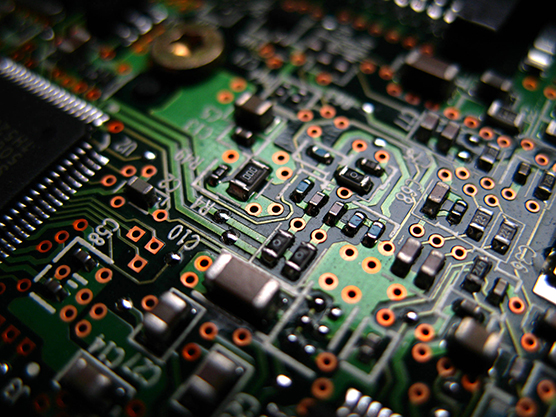
Requirements for Electronic Systems in Patient Monitors
Patient monitors are required to operate continuously for extended periods while performing real-time monitoring of vital signs. Therefore, stringent requirements are placed on the performance and reliability of their internal electronic systems, mainly reflected in the following aspects:
1) High Stability: The device must support 24/7 continuous operation, maintaining stable performance over long periods without abnormal fluctuations.
2) High Signal Accuracy: Vital signs are typically low-amplitude bioelectrical signals, requiring high-precision acquisition and transmission capabilities.
3) Strong Anti-Interference Capability: In complex medical environments with multiple electronic devices, the system must have excellent electromagnetic interference (EMI) resistance to ensure signal accuracy.
4) High Reliability: The device should support long-term stable operation with low failure rates, ensuring the continuity and reliability of monitoring data.
Applications of Medical PCBs in Patient Monitors
1. Vital Sign Signal Acquisition
Patient monitors collect physiological parameters through various sensors, including electrocardiogram (ECG), blood oxygen saturation (SpO₂), blood pressure, and respiratory signals. These signals are typically low in amplitude and require acquisition, amplification, and signal conditioning through analog front-end (AFE) circuits before further processing and analysis.
In this process, medical PCBs serve as the core circuit carrier, providing stable electrical connections and reliable signal transmission pathways between sensors and data processing systems. The acquired signals are transmitted via PCB routing to backend processing modules for analysis. Through optimized circuit layout, grounding design, and electromagnetic interference (EMI) mitigation, noise can be effectively reduced and signal integrity improved, thereby enhancing the accuracy and reliability of monitoring data.
2. Data Processing
Patient monitors are required to process multi-parameter vital sign data in real time, display the results on the monitoring interface, and trigger alarms in case of abnormalities. This process places high demands on system real-time performance and processing capability.
Within the data processing system, medical PCBs provide critical circuit interconnections and a foundation for system integration, supporting high-speed data transmission and stable operation among processors, memory modules, and various interface circuits. By optimizing high-speed signal routing and impedance control, signal integrity and transmission stability can be significantly improved, ensuring the real-time performance and accuracy of vital sign data and providing reliable support for clinical monitoring and decision-making.
3. Device Control System
A patient monitor consists of multiple functional modules, including signal acquisition, data processing, display, and alarm systems. During operation, the control system coordinates and manages these modules to ensure seamless collaboration and stable output of monitoring data.
Within the control system, medical PCBs act as the key circuit carrier, interconnecting various functional modules and establishing pathways for control signals and data transmission. Through optimized PCB layout and interface design, stable communication and signal interaction between modules can be achieved, ensuring reliable system performance and stability during long-term continuous operation.
4. Stability
Patient monitors are primarily used in clinical environments and are required to operate continuously around the clock. Their reliability is directly related to patient safety and is one of the key performance indicators. Medical PCBs provide stable electrical connections and reliable signal transmission, forming the hardware foundation for long-term operation and ensuring consistent performance during extended periods of use.
In addition, patient monitors are deployed across diverse medical environments, including emergency rooms, general wards, and mobile care settings. With strong electrical stability and environmental adaptability, medical PCBs help minimize the impact of environmental variations on system performance, reduce potential failure risks, and enhance the overall reliability and adaptability of the device.
5. Medical PCBs Enabling the Upgrade of Smart Patient Monitoring Devices
With the advancement of digital healthcare and telemedicine, patient monitoring devices are rapidly evolving toward greater intelligence and connectivity. Modern patient monitors not only enable real-time acquisition of vital signs, but also support data storage, remote transmission, and intelligent analysis to meet the growing demands of remote monitoring and data integration.
In this evolution, medical PCBs serve as the core circuit foundation, providing critical support for data interaction and stable system operation. Through optimized high-speed signal transmission and system integration design, medical PCBs enable more efficient data processing and reliable remote communication, further driving the development of intelligent and connected patient monitoring solutions.
HoYoGo is an international, professional, and reliable medical PCB manufacturer, certified to ISO 9001, ISO 14001, and ISO 13485 management systems. We offer advanced multilayer PCB manufacturing capabilities: rigid PCBs up to 100 layers; HDI PCBs up to 32 layers; flexible PCBs up to 12 layers; and rigid-flex PCBs up to 32 layers. We manufacture PCBs and provide assembly services based on customer-supplied Gerber files, BOMs, and process requirements. If you are looking for a trustworthy medical PCB partner, please feel free to contact us or send an RFQ, we will be happy to support you.


 English
 Français
 Deutsch
 Português
 Pусский
 中文
中文