Welcome to visit Hoyogo website, let's connect the world together!
Customer service hotline:+86 13723413985 or 400 058 2288
With the continuous advancement of medical technology, healthcare equipment is evolving toward greater portability, intelligence, and efficiency. Portable ultrasound diagnostic devices, characterized by their compact size, ease of operation, and ability to perform rapid point-of-care examinations, are now widely used in emergency medicine, primary healthcare, home care, and mobile medical services. In these devices, a stable and reliable electronic system is essential to ensure imaging quality and overall performance. As a core hardware carrier, the medical PCB integrates processors, sensor interfaces, and signal transmission channels, providing stable electrical connections and support for signal acquisition and system operation.
As a professional medical PCB manufacturer, HoYoGo has extensive experience in high-precision PCB fabrication and reliability control, enabling it to deliver stable and dependable PCB products for ultrasound equipment and other medical systems.
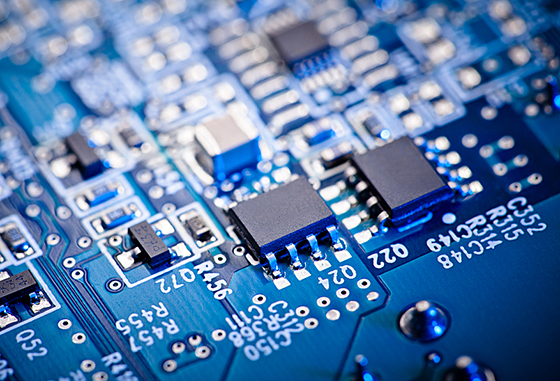
Key Features of Portable Ultrasound Devices
Compared to traditional large-scale ultrasound systems, portable ultrasound diagnostic devices must maintain high-quality imaging performance while achieving a more compact design and greater operational flexibility. These devices typically feature the following characteristics:
1)Compact size and lightweight, enabling easy portability and mobile use;
2)Fast startup and real-time imaging to support point-of-care diagnosis;
3)Low power consumption, suitable for battery-powered operation;
4)Stable and reliable performance for long-term use across diverse medical environments;
Under these requirements, the internal electronic system must offer a high level of integration and stable data processing capabilities. Medical PCBs serve as a critical foundation for enabling these key functions.
Applications of Medical PCBs in Portable Ultrasound Diagnostic Devices
1. Ultrasound Signal Acquisition
Portable ultrasound diagnostic devices emit ultrasonic waves into human tissue through a transducer and receive the reflected echo signals to generate medical images. These echo signals are typically very weak and require amplification, conversion, and processing by the electronic system.
During this process, medical PCBs provide stable electrical connections and a reliable signal transmission foundation between the ultrasound transducer and the signal processing system. Through optimized circuit layout and signal routing design, the captured echo signals can be transmitted quickly and stably to the processing system for analysis and conversion, resulting in clear medical imaging. Proper signal integrity design helps reduce noise interference and signal loss, further improving overall imaging quality.
2. Image Data Processing
In ultrasound systems, echo signals must undergo complex data processing and image reconstruction to generate diagnostic medical images. For portable devices in particular, this process must be completed efficiently within limited hardware space, placing higher demands on system performance.
Medical PCBs provide stable electrical connections and a high-speed signal transmission foundation for the data processing system. By integrating processors, memory modules, and other key electronic components, they enable a high level of system integration. Stable data transmission and strong signal integrity support real-time image processing, allowing clinicians to obtain diagnostic information promptly during examinations, thereby improving overall diagnostic efficiency.
3. Equipment Control System
Portable ultrasound devices are typically composed of multiple modules, including the probe system, signal processing system, display system, and control system. During operation, the device requires unified control over ultrasound signal transmission, data acquisition, and image display.
Medical PCBs provide stable electrical connections and a reliable signal transmission foundation for various functional modules. By integrating control processors and related interface circuits, they enable coordinated operation of all modules according to predefined programs, ensuring synchronization among subsystems and stable ultrasound image output.
4. Reliability
Portable medical devices are often used in a variety of environments, including hospitals, ambulances, and even outdoor settings. As a result, higher requirements are placed on overall device reliability. Medical PCBs provide stable electrical connections and reliable signal transmission paths, ensuring consistent device operation under different environmental conditions.
In addition, medical devices typically need to operate continuously for extended periods, placing stricter demands on the stability and durability of the electronic system. High-reliability medical PCBs offer a solid hardware foundation, helping to reduce the risk of operational failures, extend device lifespan, and further enhance overall system reliability.
HoYoGo is an international, professional, and reliable medical PCB manufacturer, certified to ISO 9001, ISO 14001, and ISO 13485 management systems. We offer advanced multilayer PCB manufacturing capabilities: rigid PCBs up to 100 layers; HDI PCBs up to 32 layers; flexible PCBs up to 12 layers; and rigid-flex PCBs up to 32 layers. We manufacture PCBs and provide assembly services based on customer-supplied Gerber files, BOMs, and process requirements. If you are looking for a trustworthy medical PCB partner, please feel free to contact us or send an RFQ, we will be happy to support you.


 English
 Français
 Deutsch
 Português
 Pусский
 中文
中文