Welcome to visit Hoyogo website, let's connect the world together!
Customer service hotline:+86 13723413985 or 400 058 2288
With the rapid advancement of generative AI, large-scale model training, and high-performance computing (HPC), AI data centers continue to expand. Compared with traditional data centers, AI data centers typically deploy large numbers of GPUs, AI accelerators, and high-speed network switches to support high-bandwidth, massive parallel computing workloads. As data traffic continues to grow, communications between servers and network switches place increasingly stringent demands on bandwidth and transmission efficiency, making high-speed optical interconnects one of the key enabling technologies in AI data center network architectures.
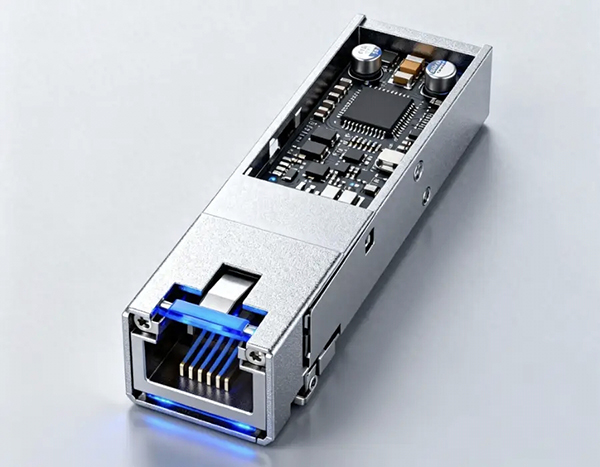
Optical modules serve as core components in high-speed optical communication links within AI data centers. Inside an optical module, the PCB serves as the electrical platform for mounting key components such as driver ICs, control ICs, and optical devices, while providing electrical interconnection and signal transmission between them. In high-speed applications, PCB design and material properties directly influence signal integrity and module stability. With the increasing adoption of 400G, 800G, and even higher-speed optical modules, the industry places increasingly stringent requirements on PCB manufacturing precision and consistency.
In high-density AI data center environments, optical modules must operate reliably over extended periods, placing increasingly stringent requirements on PCB manufacturing quality and consistency. The consistency of PCB materials, manufacturing precision, and process control directly affects the long-term reliability of optical modules. HoYoGo is an optical module PCB manufacturer specializing in high-speed optical communication PCB fabrication. The company supports PCB manufacturing for 400G, 800G, and higher-speed optical modules, with production and quality control carried out in accordance with IPC standards, providing reliable PCB manufacturing services for AI data center applications.
Growing Demand for High-Speed Optical Interconnects in AI Data Centers
AI data centers typically consist of a large number of computing nodes, where servers require continuous synchronization of model parameters, data exchange, and task scheduling. As GPU clusters continue to scale, network traffic continues to grow rapidly, making high-speed, low-latency interconnects an essential foundation for large-scale AI computing.
In recent years, 400G and 800G optical modules have gradually become mainstream deployments in AI data centers, while higher-speed optical interconnect technologies continue to evolve. As deployment scales continue to expand, optical module PCBs must meet the increasingly stringent requirements of high-speed optical communication applications for manufacturing precision, product consistency, and long-term reliability, providing stable and reliable electrical interconnections for the internal electronic systems of optical modules.
Structure and Function of Optical Module PCBs
Optical modules are typically composed of optical components, driver ICs, control ICs, power management components, connectors, and other electronic components. These components are mechanically supported and electrically interconnected through the PCB, forming the module's internal electronic system.
The primary functions of optical module PCBs include:
1) Providing mechanical support and a mounting platform for electronic components;
2) Enabling electrical interconnection between functional modules;
3) Supporting high-speed signal transmission within the module;
4) Ensuring the long-term operational stability of the electronic system.
As high-speed optical modules continue to evolve toward higher levels of integration and miniaturization, the industry places increasingly stringent requirements on PCB manufacturing precision, product consistency, and reliability.
Manufacturing Requirements and Reliability of Optical Module PCBs
Large volumes of data are continuously exchanged within AI data centers. During AI model training, large-scale GPU clusters continuously exchange model parameters and computation results, placing increasingly stringent demands on high-speed optical interconnect performance. Optical modules serve as key components of high-speed data interconnects and rely on PCBs to provide stable electrical interconnection and signal transmission for their internal electronic components.
In high-speed optical modules, the PCB serves as both the mechanical support and mounting platform for electronic components and the electrical interconnection platform, forming a critical part of the module's internal signal chain. As optical module transmission rates continue to increase, the industry places increasingly stringent requirements on the stability, consistency, and long-term reliability of electronic systems, driving continuous improvements in PCB manufacturing precision, manufacturing processes, and quality control.
Requirements for Optical Module PCBs in High-Density Deployments
Modern AI data centers typically adopt high-density deployment architectures, integrating large numbers of servers, switches, and network devices within a constrained footprint to increase overall compute resource density and network connectivity. As the deployment of high-speed optical interconnects continues to expand, the number of optical modules continues to grow, placing increasingly stringent requirements on their long-term stability, consistency, and reliability. In such environments, optical module PCBs serve as the mechanical support and electrical interconnection platform for electronic components. PCB manufacturing quality directly affects the reliability of optical modules under high-density operating conditions.
Optical Module PCBs and System Reliability
AI data centers typically operate 24/7, and the stability of communication links is critical to data transmission efficiency and continuous computing operations. Therefore, in addition to supporting high-speed communication, optical modules must also operate reliably over extended periods. The material properties, manufacturing precision, and process consistency of optical module PCBs are among the key factors affecting the reliability of optical module electronic systems. These factors directly affect the long-term operational stability of optical communication equipment.
AI Computing Infrastructure Driving Growth in Optical Module PCB Demand
In recent years, as AI infrastructure continues to expand worldwide, large-scale model training platforms, AI computing centers, and supercomputing facilities have continued to grow. As a result, demand for high-speed optical interconnects in AI data centers continues to grow. Driven by ongoing improvements in switching chip performance and the ongoing evolution of network architectures, high-speed optical interconnects have become a critical component of AI data center infrastructure.
As the deployment of high-speed optical modules continues to expand, the industry places increasingly stringent requirements on optical module PCBs in terms of manufacturing precision, product consistency, and reliability. With the continued development of AI computing infrastructure and the ongoing evolution of high-speed optical interconnect technologies, demand for optical module PCBs is expected to continue growing, further driving growth across the optical module supply chain.
HoYoGo is an international, professional, and reliable optical module PCB manufacturer, providing one-stop manufacturing services ranging from upstream electronic component sourcing and PCB manufacturing to SMT assembly, PCBA testing, and final product assembly. All products are manufactured and quality-controlled in strict accordance with IPC-A-600H and IPC-6012 standards, providing reliable optical module PCB manufacturing services for customers in the optical communications, data center, and AI infrastructure industries. If you are looking for a trusted PCB manufacturing partner, please feel free to contact us for more information or to request a competitive quotation.


 English
 Français
 Deutsch
 Português
 Pусский
 中文
中文