Welcome to visit Hoyogo website, let's connect the world together!
Customer service hotline:+86 13723413985 or 400 058 2288
During the selection of high-speed PCB materials, engineers and PCB manufacturers often refer to material classifications such as M4, M6, and M7. Common statements include “M4 is sufficient for this project,” “M6 or higher-grade materials are recommended for high-speed backplanes,” and “Does a 112G PAM4 application require M7?” For many engineering teams, these classifications have become a common industry shorthand for discussing the performance levels of high-speed PCB materials.
So, what do the “M” classifications in PCB materials actually mean? What are the differences among M4, M6, M7, and other similar categories? Do they represent material performance levels, industry standards, or naming conventions used by laminate manufacturers? In practice, these classifications can be understood from several different perspectives.
1. The Origin of the M-Series Naming Convention
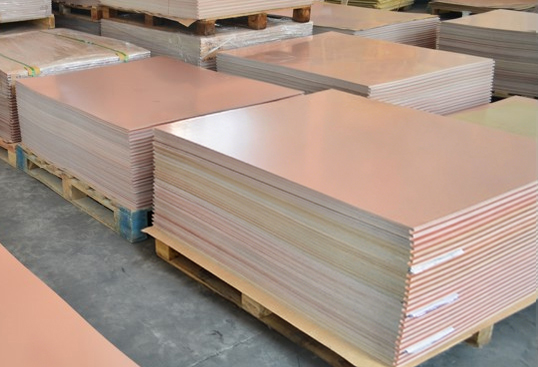
The M4, M6, and M7 designations commonly used in the PCB industry originated from Panasonic's MEGTRON® family of high-speed copper clad laminates (CCLs). As these materials gained widespread adoption in high-speed communications, data centers, and server applications, the naming convention gradually became accepted across the industry and evolved into a common way of describing the performance levels of high-speed PCB materials.
The MEGTRON family includes several material generations, such as:
MEGTRON 2(M2)
MEGTRON 3(M3)
MEGTRON 4(M4)
MEGTRON 5(M5)
MEGTRON 6(M6)
MEGTRON 7(M7)
MEGTRON 8(M8)
Among them, M4, M6, and M7 are the most frequently referenced classifications in today's high-speed PCB design and engineering discussions. Therefore, this article focuses on these three categories.
It is important to note that M4, M6, and M7 are not official material grades defined by international standards such as IPC or IEC. Instead, they are an informal industry classification that evolved from the MEGTRON material family and is widely used to describe high-speed PCB materials with different loss characteristics and application requirements. Therefore, when engineers refer to an “M6 material,” they are not necessarily specifying a particular manufacturer's laminate. In many cases, the term simply refers to a high-speed PCB material with similar dielectric-loss characteristics and comparable electrical performance.
2. Key Differences Among M-Class Materials
The differences among M-class materials are not determined by a single parameter. Instead, they reflect the combined performance of high-speed electrical characteristics, loss properties, and material reliability. When evaluating high-speed PCB materials, engineers typically focus on the following factors:
1) Dk (Dielectric Constant)
The dielectric constant (Dk) affects characteristic impedance, signal propagation delay, trace width design, and interlayer coupling. Under the same stack-up conditions, different Dk values can directly influence impedance control and signal propagation speed.
2) Df (Dissipation Factor)
Df, also known as the loss tangent, is a key parameter used to evaluate dielectric loss in high-speed signal transmission. As data rates, frequencies, and transmission distances increase, the impact of Df on insertion loss becomes more significant. Therefore, it is one of the primary parameters considered in high-speed link design and insertion-loss budgeting.
3) Copper Foil Roughness
In addition to dielectric loss, conductor loss is also a critical factor in high-frequency applications. Common copper foil types include standard copper foil, VLP (Very Low Profile), and HVLP (Hyper Very Low Profile). Different levels of copper foil roughness result in varying conductor losses, which can directly affect high-speed signal transmission performance.
4) Glass Fabric System
The glass fabric system influences Dk uniformity, high-frequency transmission consistency, and the fiber weave effect. In high-speed differential signaling and long-distance transmission applications, this factor is typically included in the overall material evaluation.
5) Thermal Reliability Parameters
Key thermal reliability parameters include Tg, Td, CTE, and T288. These characteristics mainly affect multilayer PCB processing stability, lead-free reflow reliability, thermal cycling reliability, and long-term structural stability. Therefore, M4, M6, and M7 should not be viewed as classifications based on a single parameter. Instead, they are best understood as comprehensive performance categories that reflect the overall electrical performance, loss characteristics, and reliability of high-speed PCB materials.
3. Typical Applications of Different M-Class Materials
From an industry perspective, different M-class materials can generally be understood as follows:
1) M4
M4 is typically regarded as an entry-level to mid-range low-loss material. Compared with conventional FR-4, it offers improved loss performance while maintaining reasonable cost control. Common applications include 10G Ethernet, selected PCIe Gen3 / Gen4 designs, USB 3.x, industrial control systems, and medium-speed communication equipment.
2) M6
M6 is currently one of the most widely used classifications of high-speed PCB materials. Typical applications include 25G / 28G systems, 56G PAM4, PCIe Gen4 / Gen5, servers, data-switching equipment, and optical module-related boards. Its lower dielectric loss makes it suitable for a wide range of high-speed applications.
3) M7
M7 is primarily used in high-speed systems with more stringent insertion-loss requirements, such as 112G PAM4, 400G / 800G switching equipment, high-speed backplanes, high-performance servers, and AI accelerator cards. These systems typically have tighter link-loss budgets and place higher demands on laminate performance, connector quality, via design, and overall structural consistency.
4) M8 and Higher-Performance Materials
These materials are primarily intended for next-generation high-speed interconnect applications, including 224G-class channels, next-generation switching platforms, and ultra-long-reach high-speed backplanes. Material selection for such applications typically requires a comprehensive evaluation that includes SI simulation, PCB manufacturing capabilities, connector models, via optimization, and testing validation.
It should be noted that standard FR-4 is not necessarily unsuitable for high-speed applications. In practical designs, high-speed channel performance depends not only on the PCB material itself but also on factors such as trace length, stack-up design, via structures, connector performance, and equalization techniques. For designs with relatively short links and sufficient loss margin, FR-4 can still be a viable and cost-effective option. Therefore, PCB material selection should be based on actual application requirements rather than simply pursuing lower-loss materials.
4. How to Select the Right M-Class Material
The selection of high-speed PCB materials should be based on the actual channel performance requirements of the signal channel and evaluated from a system-level perspective.
1) Conventional Low-Speed Control Applications
Examples include MCU control systems, power supply boards, relay boards, and sensor modules. These applications typically have relatively low high-speed performance requirements, and standard FR-4 materials are usually sufficient.
2) Med-Speed Interface Applications
Examples include USB 3.0, Gigabit/2.5G Ethernet, short-reach PCIe links, and high-speed ADC/DAC interfaces. Material selection should be evaluated based on factors such as trace length, PCB layer count, channel loss budget, and the number of connectors. When necessary, M4-class or equivalent low-loss materials may be considered.
3) High-Speed Systems
Examples include 25G/28G systems, 56G PAM4 applications, and PCIe Gen5 designs. M6-class materials are commonly used in these applications, particularly in designs with longer signal channels, higher layer counts, and multiple connectors.
4) Ultra-High-Speed Systems
Examples include 112G PAM4, 800G switching equipment, and high-speed backplanes. In such applications, M7-class or higher-performance low-loss materials are often recommended. Engineers should also consider factors such as stack-up design, via structures, copper foil type, reference plane integrity, return current paths, and manufacturing consistency. In addition, SI simulation and testing validation should be performed to ensure that the selected material can meet overall system performance requirements.
5. Cost Considerations
From a general industry perspective, material costs can be roughly ranked as follows:
FR-4 < High-Tg FR-4 < M4-Class Materials < M6-Class Materials < M7-Class Materials < M8 and Higher-Performance Materials
As material performance requirements increase, material costs tend to rise, manufacturing processes become more demanding, the number of PCB manufacturers capable of stable volume production may decrease, and lead times may also be affected.
In addition, higher-performance materials are often paired with HVLP copper foil, low-Dk glass fabric systems, tighter impedance-control requirements, and more complex lamination structures, all of which can further increase overall PCB manufacturing costs.
Therefore, material selection should focus on achieving the optimal balance among performance, manufacturability, and cost, while choosing the most appropriate material classification based on actual application requirements. It is important to note that higher-performance materials do not necessarily result in a better design. In PCB material selection, the most practical engineering solution is often the one that achieves the best balance among cost, manufacturability, and reliability while still meeting the required performance objectives.
HoYoGo is an international, professional and reliable PCB manufacturer. As servers, telecommunications equipment, network switches, and high-computing applications continue to evolve toward higher bandwidths and faster data rates, high-speed low-loss materials such as M4, M6, and M7 are being adopted more widely across the industry.
Backed by a mature manufacturing system and extensive experience in high-speed PCB production, HoYoGo is committed to providing reliable PCB manufacturing services throughout the material selection, process control, and quality assurance stages. Our goal is to help customers achieve the optimal balance among performance, reliability, and cost while meeting the requirements of diverse high-speed applications.


 English
 Français
 Deutsch
 Português
 Pусский
 中文
中文