Welcome to visit Hoyogo website, let's connect the world together!
Customer service hotline:+86 13723413985 or 400 058 2288
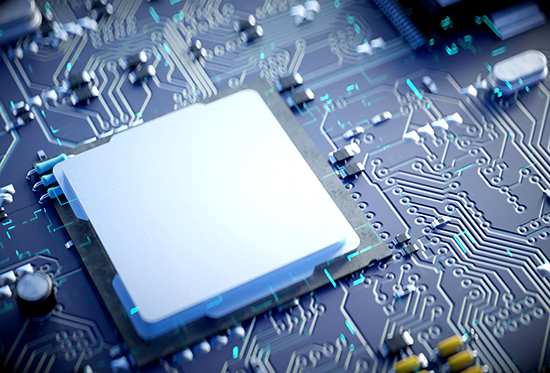
An EV charging station PCB refers to a printed circuit board used in electric vehicle (EV) charging equipment. It serves as the hardware platform for key circuits such as control, communication, monitoring, and protection, forming an essential part of the charging station’s electronic system. The PCB supports functions such as power control and driving, signal acquisition, communication interfaces, safety protection, and operational monitoring, ensuring a stable and reliable charging process.
As electric vehicles continue to gain widespread adoption, the reliability, intelligence, and energy efficiency of charging infrastructure have become increasingly critical. PCBs enhance system safety and long-term operational stability by providing reliable interconnections and electrical isolation. As a professional automotive PCB manufacturer, HoYoGo delivers reliable PCB manufacturing and quality control for new energy and power electronics applications, supplying durable PCB products that meet industry reliability requirements and support the large-scale, high-quality deployment of EV charging infrastructure.
1. Functions and Roles of EV Charging Stations
The primary function of an EV charging station is to supply electrical energy that complies with charging protocols and battery requirements, while ensuring safe and stable control and protection throughout the charging process. AC charging stations mainly provide power supply and control functions, whereas DC fast charging stations additionally perform power conversion and output regulation. Its core functions include the following aspects:
1) Power Supply / Power Conversion and Output Regulation: Electrical energy is supplied and regulated according to the charging station type. DC charging stations typically perform AC/DC rectification and DC output regulation to meet the charging requirements of vehicle batteries.
2) Charging Control: Charging voltage and current are precisely regulated, with charging strategies dynamically adjusted based on vehicle and battery status to improve charging efficiency and safety.
3) Communication, Monitoring, and Management: The charging station communicates with the vehicle and backend systems to monitor voltage, current, temperature, and operating status in real time, enabling anomaly detection, alarms, and appropriate handling.
4) Safety Protection: Equipped with protection mechanisms such as overvoltage, overcurrent, short-circuit, leakage current/ground fault, and overtemperature protection. Insulation monitoring and lightning/surge protection can also be incorporated to ensure the safe operation of both the equipment and the vehicle.
2. Core Roles of PCBs in EV Charging Stations
EV Charging Station PCBs play a critical role in EV charging equipment by providing electrical interconnection and circuit support. Their core functions are mainly reflected in the following aspects:
1) Power Control and Conversion
The primary task of an EV charging station is to deliver safe and stable charging power to electric vehicles. Power control systems are typically implemented on PCBs, which carry key control, driving, and sensing circuits to accurately monitor and regulate input and output parameters such as voltage, current, and temperature through closed-loop control, while enabling fault protection and interlock functions to ensure stable and reliable charging operation.
In AC charging stations, PCBs mainly handle power supply control, protection, and communication, working in conjunction with the onboard charger (OBC) to complete energy conversion. In DC fast charging stations, PCBs are used for the control, driving, and monitoring of rectification and conversion stages, and also participate in DC output regulation and protection functions. PCB implementation in these applications must address requirements such as high-voltage isolation (creepage and clearance), low power loss and low temperature rise, as well as EMI/EMC suppression, to support long-term and stable high-power charging operation.
2) Signal and Data Communication
Modern EV charging stations feature a high level of intelligence and require real-time data exchange with electric vehicles, backend operation platforms, and power distribution or metering systems. The control system PCBs typically integrate multiple communication interfaces and modules, such as CAN, RS485/Modbus, Ethernet, PLC, Wi-Fi, and 4G/5G cellular networks, to establish stable communication links between the charging station, vehicles, backend systems, and related equipment.
Through these communication links, charging stations can support remote control and parameter configuration, operational status monitoring, data acquisition, alarm reporting, and fault diagnosis, providing strong support for intelligent operation and centralized management.
3) Protection and Safety Functions
EV charging stations require multiple protection mechanisms to ensure safe and reliable charging operation. Control and protection systems are typically implemented on EV charging station PCBs, which carry key sensing, logic control, and driving circuits to continuously monitor critical parameters such as charging voltage, current, and temperature. When abnormal conditions such as overvoltage, overcurrent, short circuits, or ground-fault/leakage-current anomalies are detected, the system can promptly trigger alarms, derate or limit the output current, or disconnect the output to maintain safe and controlled charging operation.
The protection circuits and related components integrated into EV charging station PCBs, including fuses, surge and overvoltage protection devices, temperature sensing elements, and protection interlock circuits, enable rapid response to fault conditions. These measures help reduce the risk of equipment damage and safety hazards caused by electrical abnormalities, ensuring the long-term stable operation of the charging system.
4) Power Management
EV charging stations must accommodate a wide range of power supply and distribution architectures across different application scenarios, such as single-phase or three-phase inputs, varying power levels, modular parallel operation, and integration with energy storage or photovoltaic systems. As a result, power input management and power distribution place high demands on system design. Power management-related circuits are typically implemented on PCBs, requiring careful planning of input power paths and power distribution strategies, together with monitoring and protection mechanisms, to ensure stable operation under different power supply conditions.
Power management systems generally include high-efficiency auxiliary power conversion, power supply monitoring, and power sequencing circuits. These functions provide stable power to the main controller, communication, sensing, and driving modules, and enable information exchange with internal functional modules as well as station-level energy management or energy storage systems. This coordinated operation supports effective power scheduling and state synchronization, improving energy utilization efficiency while ensuring charging safety and reliability.
5) Fault Monitoring and Diagnostics
Monitoring and control systems are typically implemented on PCBs, which carry signal acquisition, processing, and control circuits to enable real-time monitoring and fault detection of key operating conditions in EV charging stations. By collecting data such as voltage, current, temperature, and communication link status, and applying methods including threshold evaluation, self-diagnostics, and trend analysis, the system can determine whether the equipment is operating within normal ranges and promptly identify issues such as overloads, overtemperature conditions, component abnormalities, or communication faults.
When abnormal conditions are detected, the system can activate appropriate alarms and protection strategies, and output fault codes and event logs to local display interfaces or report them to remote management platforms. This enables users or maintenance personnel to quickly locate and address issues, thereby improving the operational safety, reliability, and maintainability of EV charging stations.
HoYoGo is an international, professional, and reliable PCB manufacturer, certified to ISO 9001, ISO 14001, ISO 13485, and IATF 16949 standards. We offer one-stop services covering upstream electronic component sourcing, PCB manufacturing, SMT assembly, PCBA testing, and final product assembly. If you have related requirements, please feel free to send us an inquiry.


 English
 Français
 Deutsch
 Português
 Pусский
 中文
中文